Criminal law's little brother
Regulatory offences
A lawyer who can defend serious crimes can defend minor infringements too.
A young man once stood on the promenade in Travemünde, urinating into the Baltic Sea's wash zone. Caught in the act, he received a EUR 60 fine for ‘public nuisance’ under section 118 OWiG.
He was acquitted in court, with the local judge's legendary words:
‘Beneath the vast canopy of the heavens, a human being has no fewer rights than the deer in the forest, the hare in the field or the seal in the Baltic Sea's wash zone.’
Lübeck Local Court, 83a OWi 739 Js 4140/23 jug
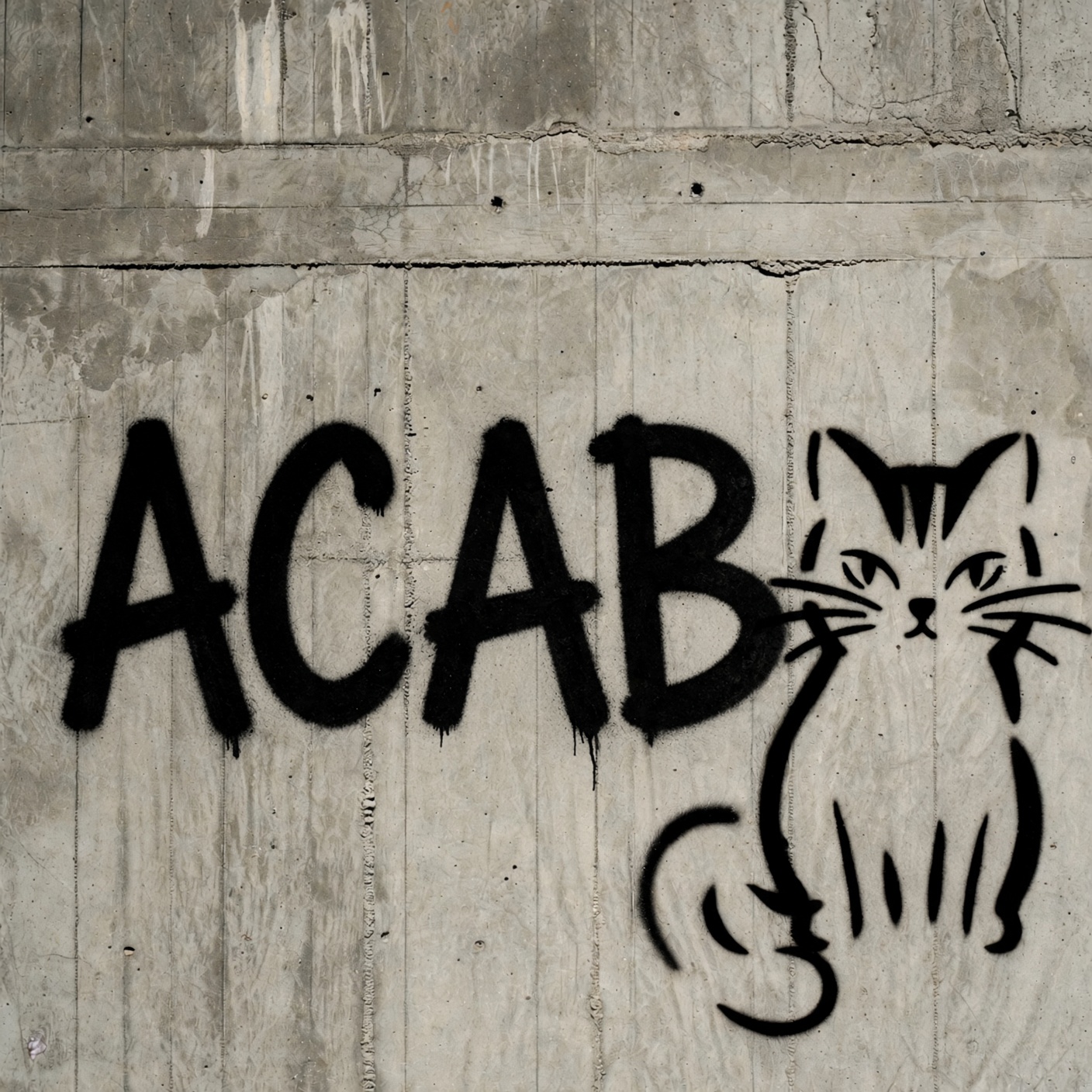
Authorities regularly try to punish slogans such as ‘ACAB.’, which do not constitute criminal insult under section 185 StGB without an individually identifiable addressee, instead as ‘grossly improper conduct’ under section 118 OWiG. It is therefore advisable to add a cat to the slogan, because: All Cats Are Beautiful.
Driving too slowly without a valid reason can also attract a fine under section 3(2) StVO.
Driving naked, by contrast, is permitted. But getting out can become expensive: depending on where you do it, section 118 OWiG, public nuisance, may apply.
It will surprise no one that breaching a dancing ban under the states' public holiday laws can attract a fine. It may be more surprising that even dancing in public with headphones has already been penalised.
Take care, too, over ‘failure to report a change of surname’ under section 54 BMG! A fine of up to EUR 1,000 may be imposed.
Entertaining as these oddities may be, regulatory offence law is not a harmless set of rules for trivial misdemeanours. It is the hinge between administrative and criminal law – and just as in criminal law, the presumption of innocence and the person's right to remain silent apply in full to administrative fine proceedings too.
Especially in road traffic law, it is rarely just a matter of a few euros in a warning fine. For people who need a driving licence for work, penalty points in Flensburg or a one- to three-month driving ban can quickly threaten their livelihood. Standardised measurement procedures such as speed cameras and distance measurements are also prone to errors – from incomplete measurement records and missing calibration certificates to incorrect road signs.
The consequences can be even more serious in business and corporate matters. Breaches of foreign trade law, tax and customs law, data protection law (GDPR), occupational safety or environmental law, as well as breaches of supervisory duties under section 130 OWiG, regularly lead to five- or six-figure fines – including confiscation of the proceeds and entries in the Central Trade Register that can block public contracts.
Regulatory offences play a particular role in the political context – especially at demonstrations and rallies. When criminal law does not apply, police and assembly authorities readily turn instead to the Assemblies Act.
Alleged breaches of conditions, carrying so-called ‘protective weapons’ or ‘masking’, leaving an alleged assembly area or failing to comply with a dispersal order: a notice imposing a fine of several hundred or thousand euros can quickly arrive.
What is often overlooked is that fundamental rights apply in administrative fine proceedings too – particularly freedom of assembly under Article 8 GG and freedom of expression under Article 5 GG. Not every police direction given on the ground was lawful, and not every condition withstands judicial review. A fine notice following a demonstration should therefore not simply be paid through gritted teeth, but examined for constitutionality and lawfulness.
Whether a lawyer's defence in administrative fine proceedings makes economic sense depends on the individual case. For a simple parking infringement without penalty points, legal fees are disproportionate to the fine.
The situation is different when a driving ban, penalty points in Flensburg, a substantial fine, professional consequences or a political allegation are at stake. Legal expenses insurance regularly covers defence costs in regulatory offence cases – particularly traffic matters, but often general or work-related matters too.
One thing matters above all: Do not comment on the case to the police or fines authoritybefore the case file has been inspected. An enquiry form filled in too hastily, admitting who was driving or accepting a factual account, often deprives the defence of its best starting points.
Received a fine notice or an enquiry form?
Get in touch